
By Eskil Aaning Mogstad, Inverter Development, Revolve NTNU
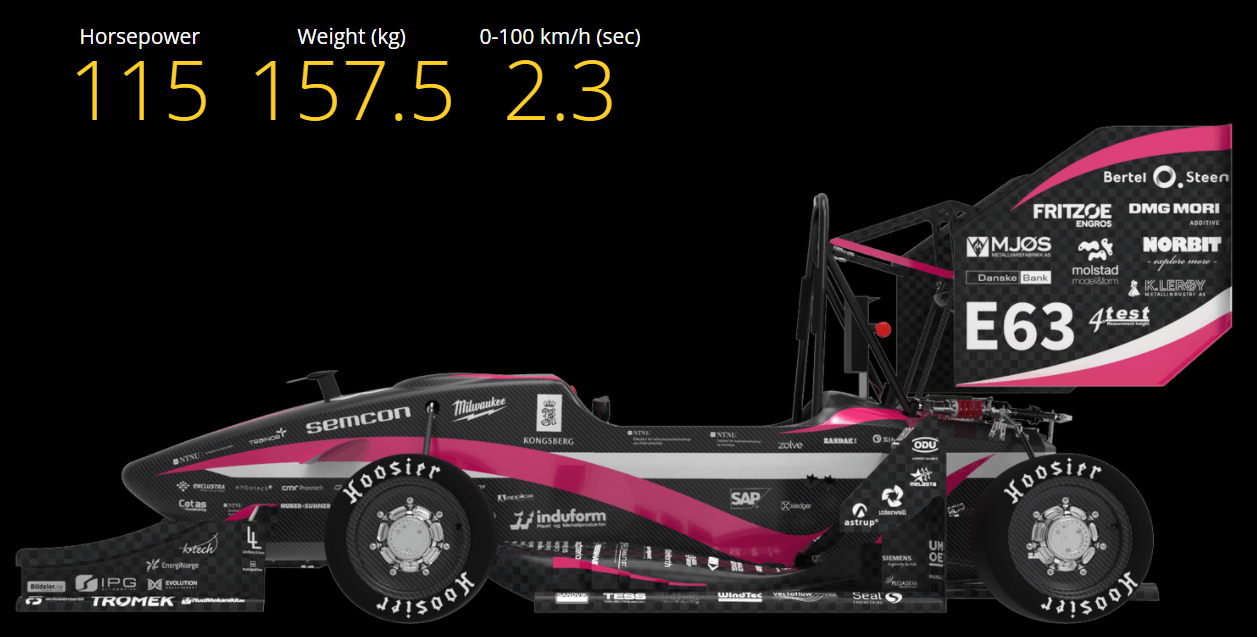
LUNA
Formula Student is regarded as one of the largest competitions for engineering students in the world, with participants from all over the world from around 1000 different universities. Revolve NTNU is a Norwegian Formula Student team, which was established in 2010, and has built 9 cars from the ground up since then, including five four-wheel-drive electric vehicles.
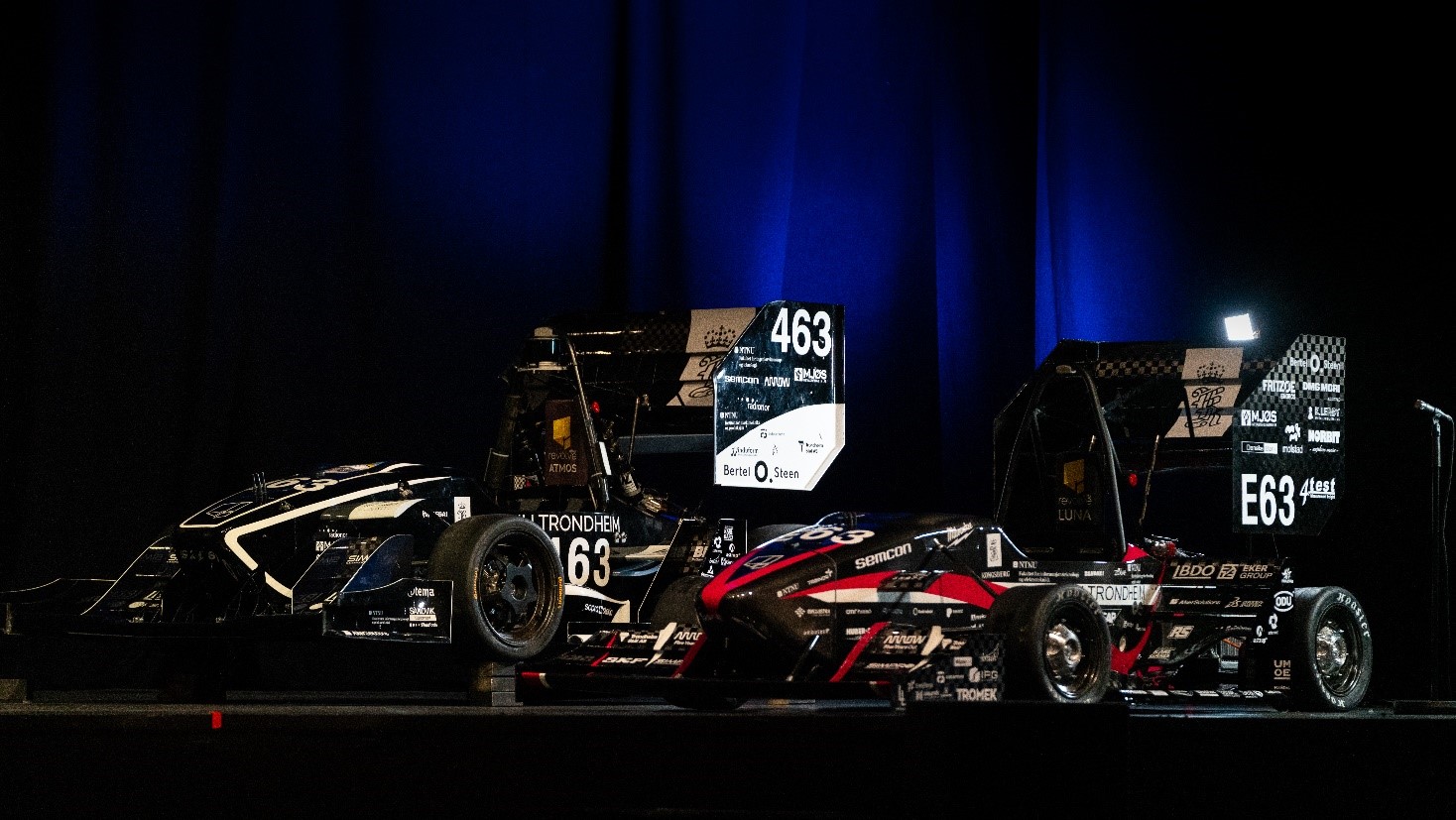
LUNA in garage
The Revolve NTNU Powertrain
The powertrain currently used by Revolve NTNU features a lithium battery accumulator at 600 VDC, capable of delivering up to 80 kW for propulsion, four interior permanent magnet synchronous motors, one in each wheel, supplied by four self-developed inverters.
The inverter is responsible for converting direct current from the battery to three-phase alternating current with variable magnitude and frequency for running the permanent magnet synchronous motors. The conversion from DC to AC is done by using power electronic switches, in our case SiC MOSFET transistors, rated for 1200 volts and a current handling capability of over 100 amperes. The motors themselves are controlled using field-oriented control, a vector control method using current, voltage, and position feedback to calculate the duty cycles for controlling the inverter.
Moving over to a System on Module
During the 2020 season, Revolve NTNU decided to move away from implementing an SoC on our Vehicle Control Unit ourselves, to use an Enclustra Mercury ZX5 System on Module instead. This reduced the complexity of the baseboard considerably, going down from an eight-layer to a four-layer board, and removing a big portion of the surrounding circuitry required for the SoC. We chose the Mercury ZX5 module for this project, mainly due to its competitive size, ease of implementation, and use. Additionally, Revolve NTNU had some of the Enclustra Mercury ZX5 modules in-house from an earlier project back in 2016. Further, some of our partner companies had experience with the Enclustra modules, where several alumni from the electronics department of the organization had gathered experience with the use of these modules, which we saw as quite beneficial.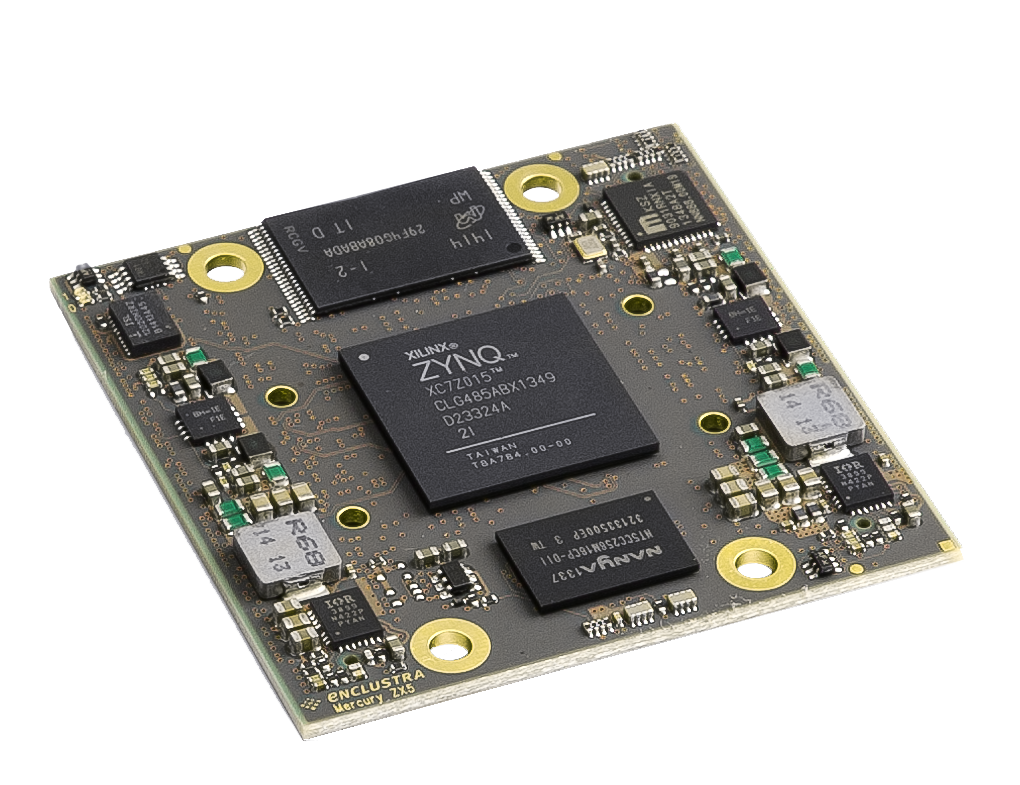
Enclustra Mercury ZX5-15/30 SoM
The beginning of the inverter & motor controller redesign
During the spring semester in 2020, the Formula Student competitions for the season were canceled, and Revolve NTNU found it infeasible to finish the 2020 vehicle due to the pandemic. Looking at the bright side of things, we suddenly found ourselves with 6 months of extra time for research and development of a new vehicle, and we quickly began investigating different concepts. One of them was a complete redesign of the inverter and motor controllers. The main focus areas were to improve the packaging and increase maintainability. Reducing the mass of the system wasn’t a main focus area of the redesign, but we quickly realized that there was quite a bit of potential in that department as well. The main ideas were to switch out the discrete transistors with modules and greatly increase the processing power of the system, to create a platform where we in the future could focus on improving the control algorithms.
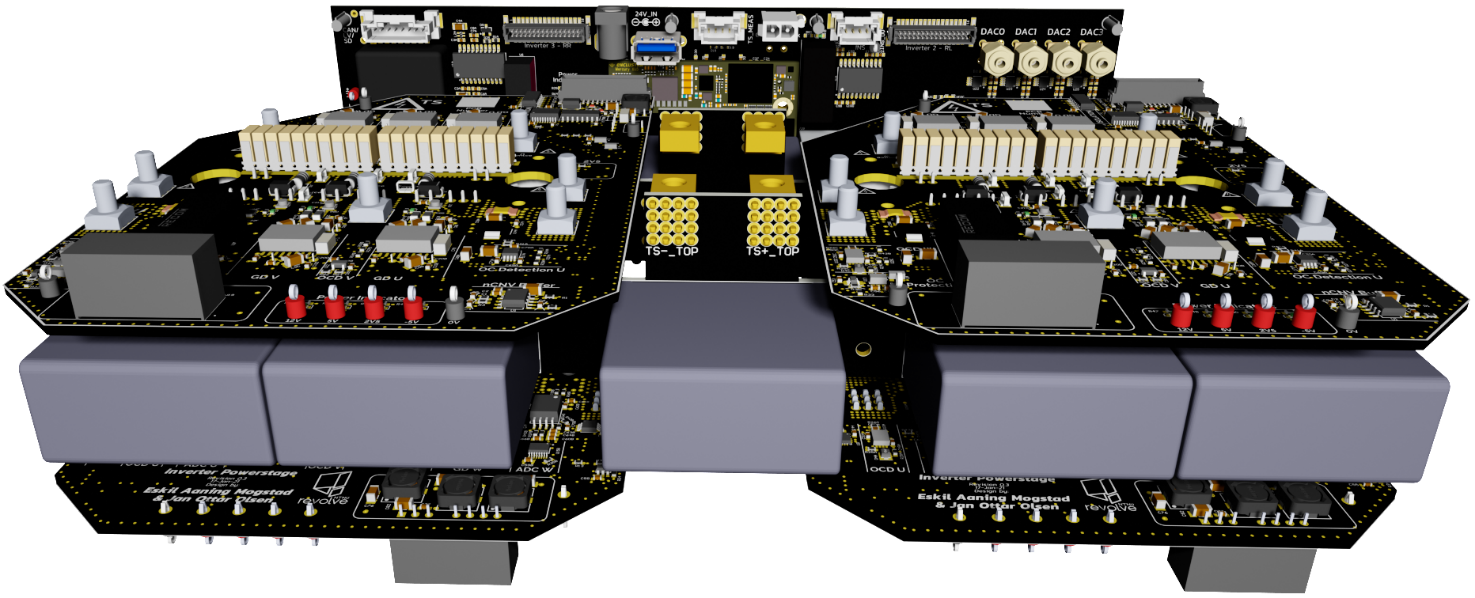
Render Image of the Inverter
Based on the success of the Mercury ZX5 based VCU project during the 2020 season, it was decided that designing the motor controller baseboard around an SoM would be a good solution. We decided to find a manufacturer of modules first and then find a module. As we had a good experience within the organization with Enclustra modules with the VCU project from the previous season, we quickly decided to use these modules. As one of the goals of the motor controller redesign was to create a platform to be able to focus on the further development of the motor control algorithm, we wanted a module with a powerful SoC, while at the same time being quite small. We landed on the Enclustra Mercury XU5 module, which features the Zynq™ UltraScale+™, a considerable step up in performance from the Zynq™ 7000 based ZX5, to hopefully have more than enough computational power for years to come.
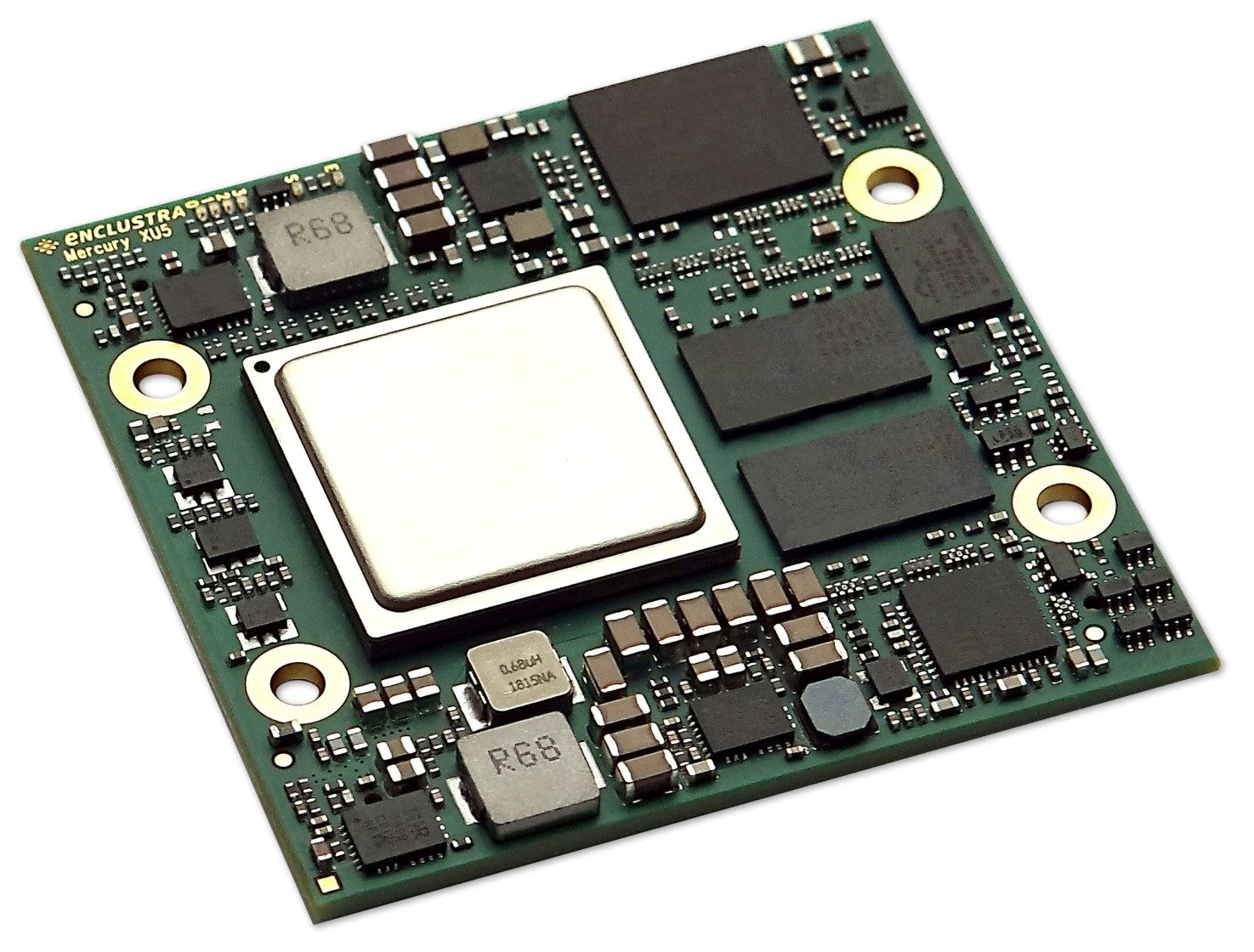
Enclustra Mercury XU5-2CG/2EG/3EG/4EV/5EV SoM
The Benefits of a System on Module
One of the huge benefits of using an SoM instead of implementing an SoC is the greatly reduced development time, as the most complicated parts are already done. For instance, one avoids having to route out the 784 pin BGA package and intricate interfaces like DDR high-speed memory, which requires both a fair bit of time and a PCB with multiple layers.
Another benefit of the Mercury XU5 module is the included power supplies. To power up the module, one only needs a single supply voltage between 5 and 12 volts. The module itself generates all the required supply voltages it needs, including 1.8, 2.5, and 3.3 volts. These power rails can be used to power up the circuits on the baseboard, removing the need to add extra power converters, simplifying the design of the custom baseboard considerably.
The computational power
One of the main reasons we chose the Enclustra Mercury XU5 for our design was the big upgrade in processing power. In our previous motor controller, based around four Cortex M7 based MCUs running at 300 MHz, one for controlling each motor, there was next to no computational time left, preventing us from for instance increasing the switching frequency, improving the performance, or moving over to a more complex control system. The upgrade to the XU5 gave us a lot more processing power to work with, including four Cortex A53 cores clocked at 1.3 GHz, two Cortex R5 cores clocked at 500 MHz in addition to an FPGA, which will meet our computational demands for several years to come.
Software architecture
In our design, we chose to run the motor control algorithms on the two R5 cores. Several IP cores were developed in VHDL to run on the FPGA included in the Mercury XU5, including a PWM peripheral, cores for the different ADCs we use in the design, and a watchdog module, disabling the power stage in case of an error like an overcurrent condition.
The A53 cores haven’t been used as of yet in our design, but we are planning to run Embedded Linux on them in the future, and develop applications for both data logging and configuration/tuning of the system, creating a very capable and configurable system helping to reduce weight and increase performance.
The development and road ahead
The development of the new inverter and motor controller has been quite rapid. The concept period for the system started in March 2020 and during the late spring and summer months, the schematics and layout of the boards were designed. The autumn was spent thoroughly testing the new power electronics in addition to hardware, FPGA, and software bring-up. This all led to us being able to spin the motors with the entirely new system for the first time in mid-December 2020.
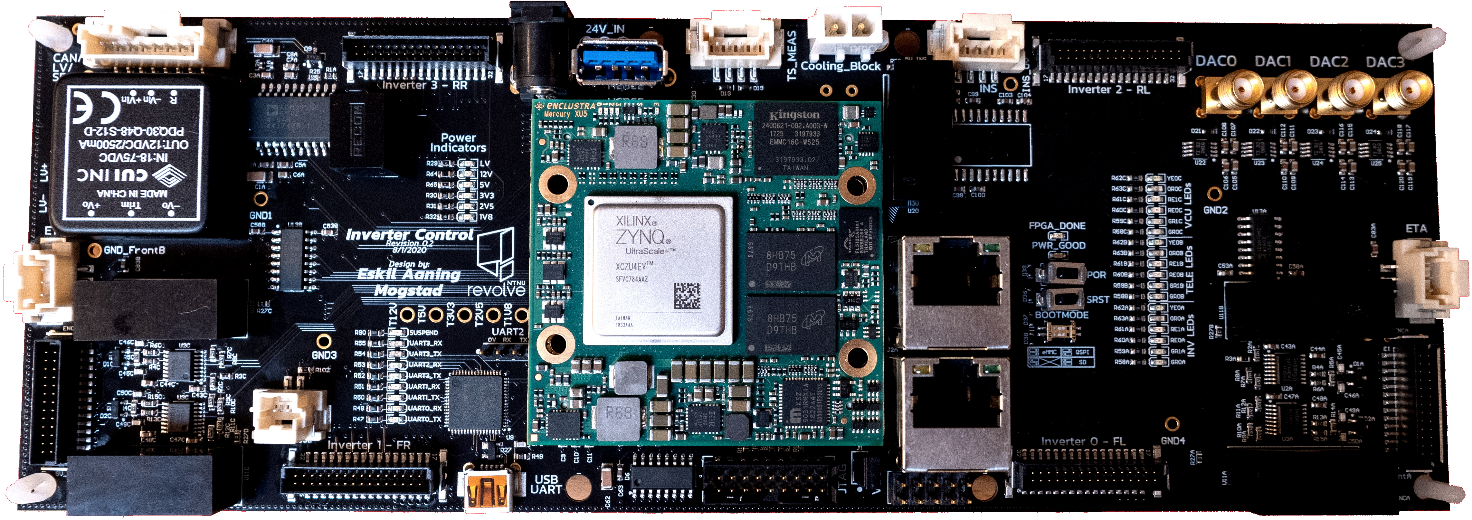
Enclustra XU5-4EV SoM in the control unit
The spring of 2021 started out with current handling tests of the power electronics, checking the heat development in the power electronics during emulated Acceleration, AutoX, and Endurance events. After successful testing of this, the time was mainly spent making the motor control algorithm work in the flux-weakening region. We had a huge breakthrough on the 10th of March 2021, when we finally managed to make our motors spin up to 20kRPM with the new control card and power electronics for the first time.
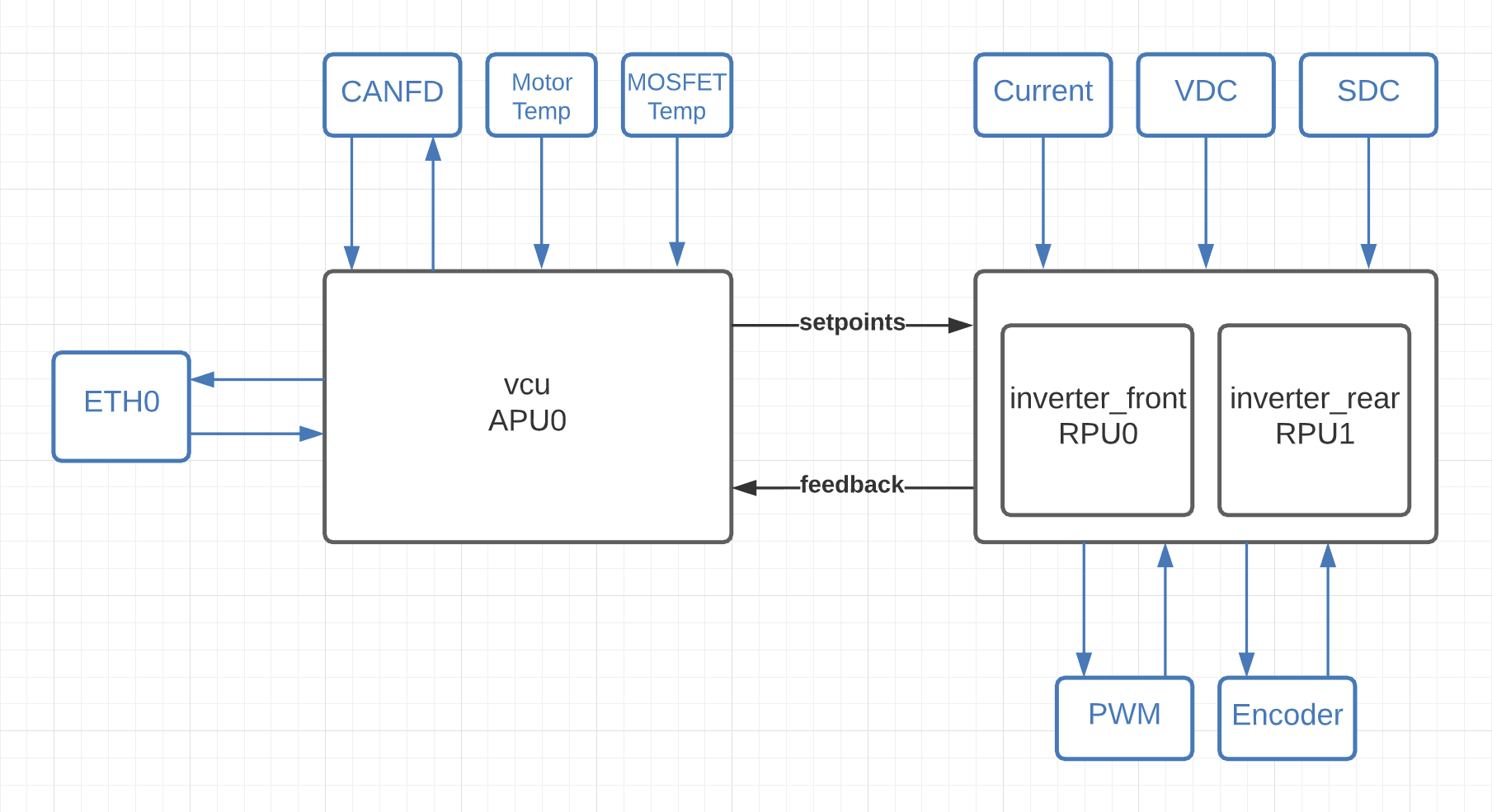
Block Diagram
After the breakthrough, we started working on making the firmware able to control four inverters/motors at the same time, instead of just one. The project was sadly put on hold in April, as we saw it infeasible to finish the system in time for the testing season for LUNA, the 2021 vehicle, and prioritized focusing on other areas in the electronics department.
We are continuing the development of the new inverter & motor controller project for the 2022 season, hoping that we will be able to finish the system in time for the next-generation vehicle.

Installation
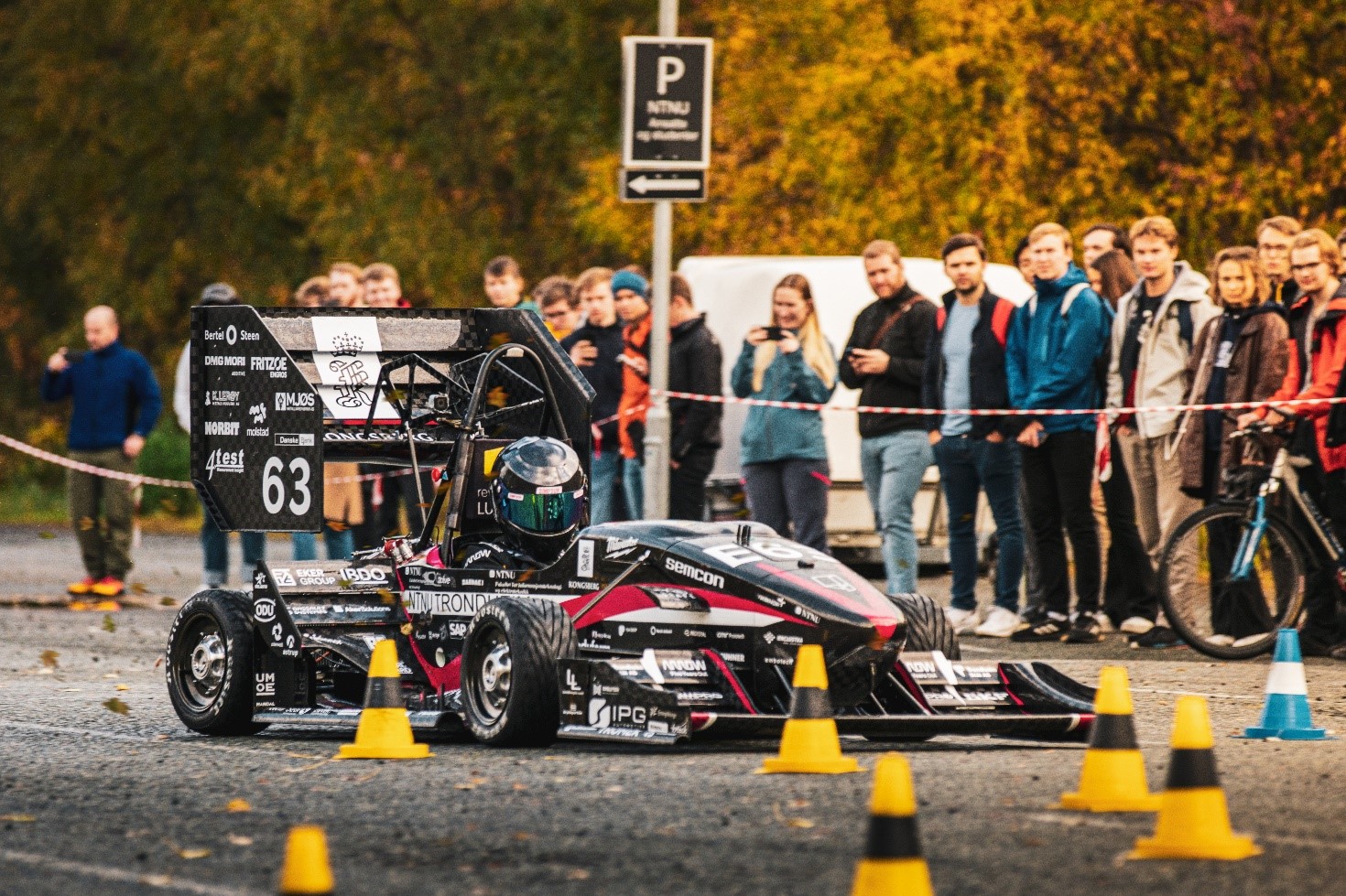
Testing
 English
  Chinese